
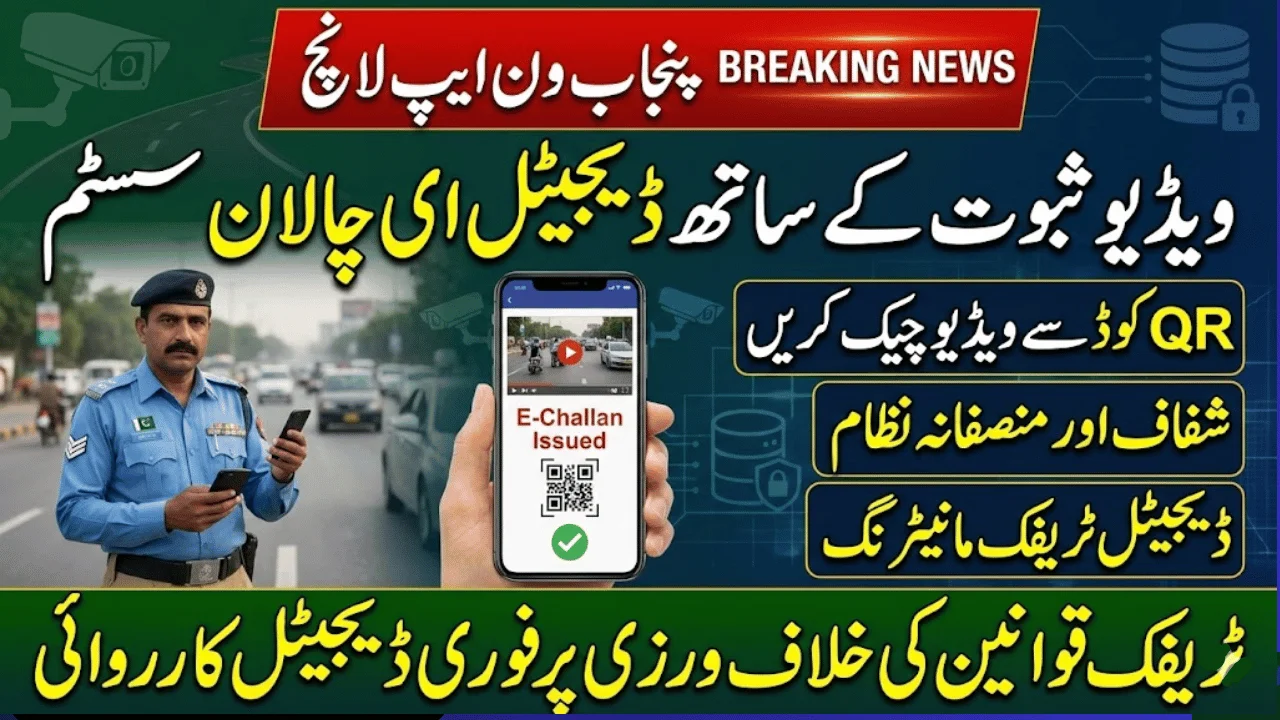
Punjab has officially introduced a new digital traffic enforcement system called “One App”, marking a major step toward technology-based road regulation in the province. The system enables traffic authorities to issue e-challans backed by video evidence, ensuring transparency, accountability, and fair enforcement.
According to reports published by The Express Tribune, the initiative is being described as Pakistan’s first comprehensive evidence-based traffic challaning mechanism.
This move is expected to modernize traffic management, reduce disputes over fines, and strengthen digital governance across Punjab.
What Is the Punjab ‘One App’ Traffic System?
The One App is a centralized digital platform designed to:
-
Issue electronic traffic challans (e-challans)
-
Attach verifiable video evidence to each violation
-
Provide QR-based access to violation details
-
Enable instant verification of driver and vehicle records
Unlike traditional challan systems that relied heavily on manual judgment, the new system focuses on evidence-based enforcement.
How the Digital E-Challan System Works
Here’s how the new traffic challan mechanism functions:
-
Traffic officials record a violation using the One App.

-
Video footage of the incident is preserved in the system.
-
An electronic challan is generated.
-
The citizen receives details of the violation.
-
A QR code allows independent viewing of video evidence.
This ensures that fines are supported by recorded proof, reducing chances of dispute or misuse.
Key Features of Punjab’s One App
1. Video-Based Evidence for Every Challan
Each traffic violation is digitally recorded and stored, allowing full transparency.
2. QR Code Verification
Motorists can scan a QR code to review the recorded footage linked to their challan.
3. Instant CNIC & License Verification
Traffic personnel can verify:
-
CNIC details
-
Driving license validity

-
Vehicle ownership
-
Stolen vehicle records
4. On-Spot Database Access
Authorities can check:
-
FIR status
-
Criminal records
-
Vehicle fitness certificates
-
Route permits
5. Digital Action Against Encroachments
The system also supports action against:
-
Illegal parking
-
Encroachments

-
Environmental violations
Phase 2: Introduction of a Point-Based Penalty System
Officials have confirmed that in the second phase, a point-based penalty system will be introduced.
Under this system:
-
Repeated serious violations may accumulate penalty points.
-
High-risk offenses could result in FIR registration.
-
Chronic violators may face stricter enforcement measures.
This structured approach aims to improve long-term driving behavior.
Why the One App Matters for Citizens
The new system provides several public benefits:
✔ Transparent enforcement
✔ Reduced human discretion
✔ Digital proof of violations
✔ Less room for disputes
✔ Faster processing of challans
✔ Strengthened road safety monitoring
By shifting toward technology-backed enforcement, authorities aim to ensure non-discriminatory traffic regulation.

How This Impacts Traffic Management in Punjab
Punjab’s digital transformation in traffic policing aligns with broader efforts to:
-
Improve governance through technology
-
Strengthen accountability
-
Reduce corruption risks
-
Enhance public trust in enforcement systems
Experts believe that evidence-based challaning can also reduce court case backlogs related to traffic disputes.
Quick Summary
What is Punjab’s One App?
It is a digital traffic enforcement system that issues e-challans supported by video evidence.
How does it work?
Traffic violations are recorded, stored with video proof, and linked to QR codes for citizen verification.
What’s new in Phase 2?
A point-based penalty system for repeated traffic violations.
Official Source
Details regarding the launch were reported by The Express Tribune (Pakistan).
Final Thoughts
Punjab’s One App represents a significant shift toward modern, digital traffic enforcement. By integrating video documentation, QR verification, and centralized databases, the province is moving toward a more transparent and accountable road management system.
As implementation progresses, citizens are encouraged to follow traffic rules carefully and stay updated through official government channels.